The Calculation Most Listing Agents Skip
A seller lists at $525,000. The home sits. Buyer feedback comes back vaguee - "hard to visualize," "felt cold," "needed too much work." Three weeks in, the price drops to $499,000. This is what happens when home staging for agents never makes it into the listing conversation.
That's a $26,000 reduction. At 3% commission, the agent absorbs over $700 in gross commission loss. The seller absorbs the rest.
Professional home staging in the Central Texas market averages around $3,850. That number, weighed against a five-figure price cut, is not a cost conversation. It's a math problem.
The agents who understand that are the ones leading with staging at the listing table. The ones who don't are learning the lesson the hard way, one price reduction at a time.
What the Data Says About Staging and Sale Price
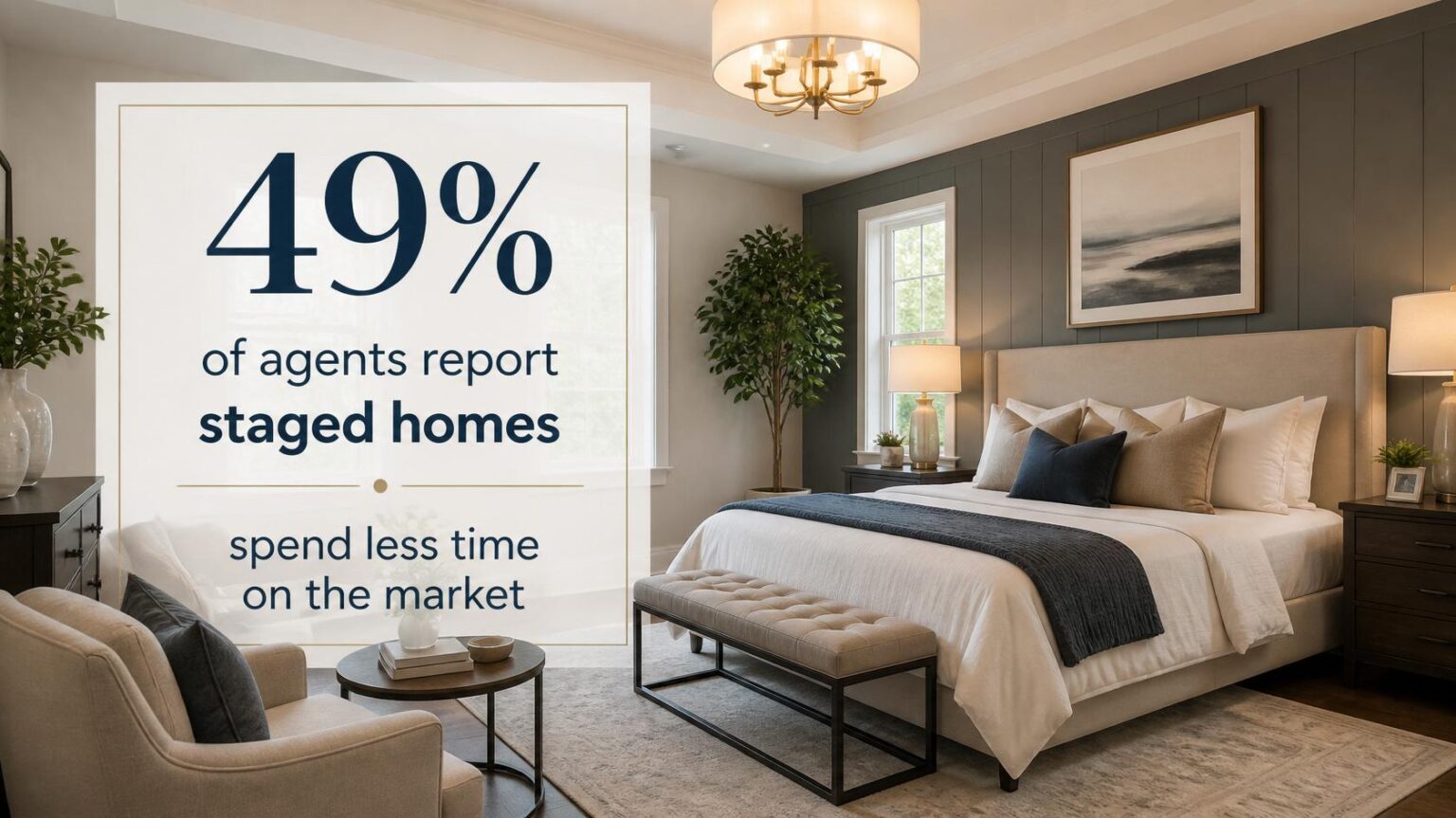
This isn't anecdotal. The NAR 2025 Profile of Home Staging, which is the the most current industry data available, is direct: nearly three out of ten real estate agents reported that staging their sellers' homes led to a 1% to 10% increase in the dollar value offered, and almost half of sellers' agents observed that staging reduced the time homes spent on the market.
On a $500,000 home, a 5% increase in offer value is $25,000. Staged homes in recent performance tracking sold in an average of 23 days versus 45 days for unstaged homes, and in a market where the Travis County median sits around $485,000, selling faster means real savings in carrying costs including mortgage, insurance, and taxes.
Among buyers' agents, 83% said staging made it easier for buyers to envision the property as their future home, and only 12% said it had no effect. Buyers who can't visualize don't make offers. Buyers who hesitate negotiate harder. The hesitation is what costs sellers, and it's largely preventable.
The Objections That Don't Hold Up
Agents avoid the staging conversation for a few predictable reasons. None of them survive scrutiny.
"My seller won't pay for it." That's a framing problem, not a seller problem. Present staging as an optional expense and sellers push back on cost. Present it as price protection — invest $3,850 now or risk absorbing $20,000 to $30,000 in price reductions later — and the math does the work for you. Most sellers, when they understand the tradeoff, make the right call.
"Staging is too expensive." This objection almost always comes from agents who picture a full vacant home install and stop there. That's one approach. It's not the only one. More on that below.
"The market will sort it out." With Central Texas inventory at levels the region hasn't seen in years and buyers negotiating from a position of choice, the market is sorting it out — against listings that aren't prepared. New listings in the Austin area jumped by 19.6%, meaning the market is more competitive than ever. Buyers have options. They are not working harder to imagine a home's potential. They're moving on to the next listing.
Home Staging for Agents: Vacant, Occupied, or Guided Options for Every Listing
Here's where the conversation usually breaks down. An agent mentions staging, the seller hears "furniture truck and a $5,000 bill," and the discussion ends before it starts. That assumption leaves some of the most effective, and accessible tools completely off the table.
Professional home staging exists on a spectrum. Every property has an entry point.
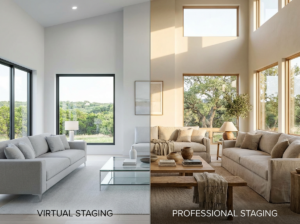
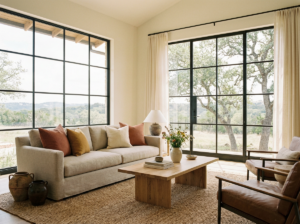
Vacant Home Staging is the full-service approach — a staging team brings in furniture, décor, and finishing details, installs everything, and delivers the home ready for listing photography and buyer showings. It's the highest-impact option for vacant properties where buyers have nothing to anchor to emotionally. It also carries the highest price point, which is where most agents mentally exit the conversation.
Occupied Home Staging is designed for sellers who are still living in the home. A professional stager works with what's already there - identifying what stays, what gets repositioned, and what needs to disappear before the first showing. A home doesn't have to be empty to benefit from staging. It just has to look intentional. This approach typically costs less than a full vacant install and can produce significant improvements in how a home presents both online and in person.
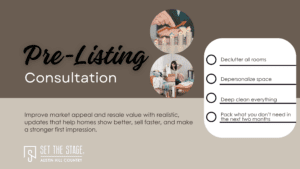
Seller-Directed Staging with Professional Guidance is the lightest-touch option, and one of the most underestimated. A stager conducts a walkthrough, builds a specific action plan, and gives the seller clear direction on what to address before photography. What to move. What to remove. Where flow problems exist. What buyers notice first. The seller executes. The cost is a fraction of a full stage. The result is dramatically better than what most sellers produce without guidance.Three options. Meaningfully different price points. All of them better than listing a home that wasn't prepared. The right fit depends on the property, the seller's situation, and the timeline, which is exactly why this conversation needs to happen at the listing table, not after the first showing falls flat.
What Skipping the Staging Conversation Actually Costs the Agent
Price reductions are the visible loss. The downstream effects are just as real.
Every day a listing sits is a day you're managing a frustrated seller. Every reduction is a conversation you could have avoided. Every low offer is a negotiation that burns time, tests the relationship, and lands in the seller's memory right before they decide who to refer when the neighbor lists.
When homes were staged, 30% of sellers' agents observed a decrease in time on market, while 19% noted a significant reduction in selling time. Faster sales protect your timeline, protect seller equity, and protect the relationship that generates future business.
When a listing performs well, the agent gets the credit. When it sits and the price cuts begin, the property gets blamed, but the agent's recommendation, or absence of one, doesn't disappear from the seller's memory. Only 21% of sellers' agents currently stage all their listings. That gap is an opportunity for the agents who understand what's at stake - and a liability for the ones who don't.
How to Talk to Sellers About Staging Before You List
The strongest listing agents aren't treating staging as an afterthought. They're leading with it, not as a cost discussion, but as a strategy discussion. Here's language that works:
"Before we talk about list price, I want to walk through how we're going to present this home. Buyers right now are selective and they have choices. The listings that sell quickly are the ones that are fully prepared from day one, and they photograph well, they show well, and they give buyers no reason to hesitate. Here's what I recommend before we go live."
That framing positions you as the expert, sets seller expectations correctly, and opens the door to the staging conversation without leading with price. Once a seller understands that the alternative to a modest upfront investment might be a price reduction that reaches five figures three or four weeks into the listing, the math handles the objection.
we'll have the hard conversation. you close the listing.
The agents who win listings, and protect them, aren't the ones who avoid difficult conversations. They're the ones who come prepared with a plan, a clear rationale, and options their sellers can actually act on. Staging is not a luxury add-on for high-end listings. It's a standard part of a sound go-to-market strategy, and in a market where buyers have more choices and less patience than they've had in years, it's one of the few levers entirely within your control.
And if the conversation feels like a hard one to lead? You don't have to lead it alone. Bring us in. A professional walkthrough with one of our stagers gives your seller an objective, third-party assessment of exactly what the home needs before it lists, without you having to be the one delivering the news.
We'll identify what's working, what isn't, and what the path forward looks like across all three staging options. That walkthrough comes at a small fee, but if your seller moves forward with staging services, it folds directly into the project cost.
You focus on the listing strategy. We'll handle the hard conversation about the house.
FAQs: Home Staging for Listing Agents
Q: Should agents recommend home staging to every seller?
A: In most cases, yes. The NAR 2025 Profile of Home Staging found that nearly 29% of agents reported staging led to a 1% to 10% increase in the dollar value offered, and 49% observed it reduced time on market. The conversation looks different depending on the property — but some form of staging preparation applies to virtually every listing.
Q: Does home staging increase sale price?
A: According to the NAR 2025 Profile of Home Staging, 29% of agents reported that staging led to a 1% to 10% increase in the dollar value offered. On a $500,000 home, even a 3% lift equals $15,000 — several times the cost of staging.
Q: What happens if you don't stage a home before listing?
A: Unstaged homes typically sit longer, attract lower initial offers, and are more likely to require price reductions. In a competitive market with high inventory, buyers move quickly past listings that don't connect emotionally.
Q: Does home staging work for occupied homes?
A: Yes. Occupied staging is one of the most practical and cost-effective options available. A professional stager works with existing furniture and décor to edit, reposition, and refine the space so it presents clearly and intentionally — without the seller having to vacate or bring in all-new furnishings.
Q: How much does home staging cost in Central Texas?
A: Professional home staging in the greater Austin and Central Texas market starts at around $3,850, depending on the property size, staging approach, and scope of service. Occupied staging and seller-directed consultations typically cost less than a full vacant install.