
If you’re planning to sell your home in Greater Austin or the Texas Hill Country, the market looks very different than it did just a few years ago.
Inventory has increased. Buyers have more options. New construction is offering incentives. Price reductions are becoming common across Austin, Leander, Georgetown, Liberty Hill, Cedar Park, Round Rock, and Dripping Springs.
The question most sellers ask is whether their home is “nice enough” to sell.
That usually isn’t the right question.
The real question is whether your home is positioned to compete in today’s market, and whether buyers will see enough value to support your listing price.
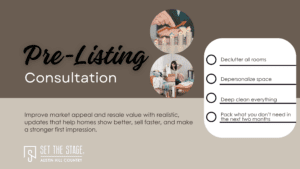
Before you list, it helps to understand where your home stands. We created a short home readiness quiz for Austin sellers to evaluate how prepared their home is for today’s market conditions.
today's austin market rewards prepared sellers
From 2020 through early 2024, many homes in Austin sold with multiple offers and minimal preparation. That environment allowed sellers to list quickly and still get strong results.
Today’s market works differently.
Homes are staying on the market longer, buyers are comparing multiple options, and online presentation plays a larger role in whether a property gets showings in the first place.
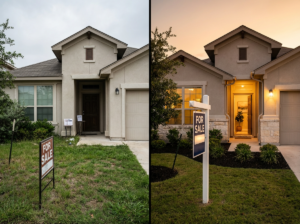
If a listing doesn’t make a strong first impression online, buyers tend to assume they have negotiating power. That often leads to price reductions or concessions later in the process.
Preparation before listing has become one of the biggest factors influencing how smoothly a home sells.
why presentation matters more than sellers expect
Buyers rarely see just one home. They compare listings side by side, often within the same price range and neighborhood. That comparison happens online first.
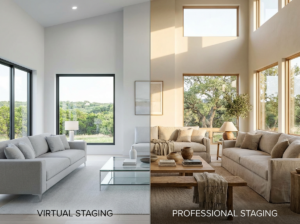
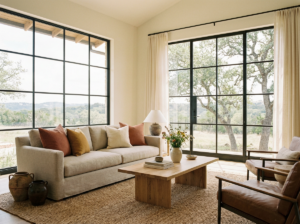
A home that feels bright, open, and move-in ready tends to generate more interest and stronger offers. A home that feels empty, crowded, dark, or overly personalized can create hesitation, even when the property itself is desirable.
Vacant homes often feel smaller than they really are. Lived-in homes can make it harder for buyers to picture themselves in the space. Even small distractions can affect how buyers interpret value.
This is where preparation and staging can make a measurable difference.
Professional staging isn’t about decoration. It’s about helping buyers quickly understand the space and feel confident about the home.
At the same time, not every home needs full staging. Some properties benefit more from a targeted consultation and strategic adjustments before going live.
is home staging worth it in austin?
This is one of the most searched questions in the Austin real estate market.
Here’s the reality:
Strategic home staging can:
Increase perceived value
Reduce time on market
Strengthen negotiation power
Prevent early price reductions
Help listings stand out in MLS and Zillow searches
In a competitive Greater Austin real estate environment, presentation impacts profit.
the cost of a price reduction vs. the cost of staging
On a $650,000 home, a 3–5% price reduction means losing roughly $19,500 to $32,500. Once a reduction hits the MLS, it often becomes the new negotiation starting point, giving buyers immediate leverage.
Preparation typically costs far less. Staging or a targeted pre-listing consultation often represents about 0.5–1.5% of a home’s value – a relatively small investment compared to the impact a price reduction can have.
It’s also not just about price. Homes that present well tend to sell faster, which usually means stronger negotiating power and fewer concessions.
Preparation is a decision sellers control. Price reductions usually come after the market responds.
Position Before You List
Homes that enter the market well prepared tend to create stronger first impressions and more consistent showing activity. Buyers respond to listings that feel complete and easy to understand.
Homes that go live without preparation often end up adjusting after the fact, either through price reductions or concessions during negotiation.
Whether staging makes sense depends on several factors, including price range, competition, condition, and buyer expectations. Some homes need full staging. Others need only a few strategic changes.
If you’re unsure where your home falls, the simplest place to start is with a quick evaluation.